The pattern behind everything it does well
AI is good at work that is repetitive, text-shaped, and cheap to check. Drafting, summarising, sorting, reformatting, extracting. If a task has a clear input, a clear output and a tolerant failure mode, it is probably a fit.
It is bad at judgement, at being reliably accurate about your specifics, and at anything where being wrong is expensive or hard to notice. Those limits are structural. They are not going to be solved by a better prompt.
Automate the boring one, not the painful one
The instinct is to automate whatever annoys you most. That is usually the wrong choice, because tasks feel painful precisely when they need judgement — which is what automation handles worst.
The right first candidate runs often, is well-defined, and does no damage when it gets something wrong. It is rarely the task you would have picked.
Start assisted, not automatic
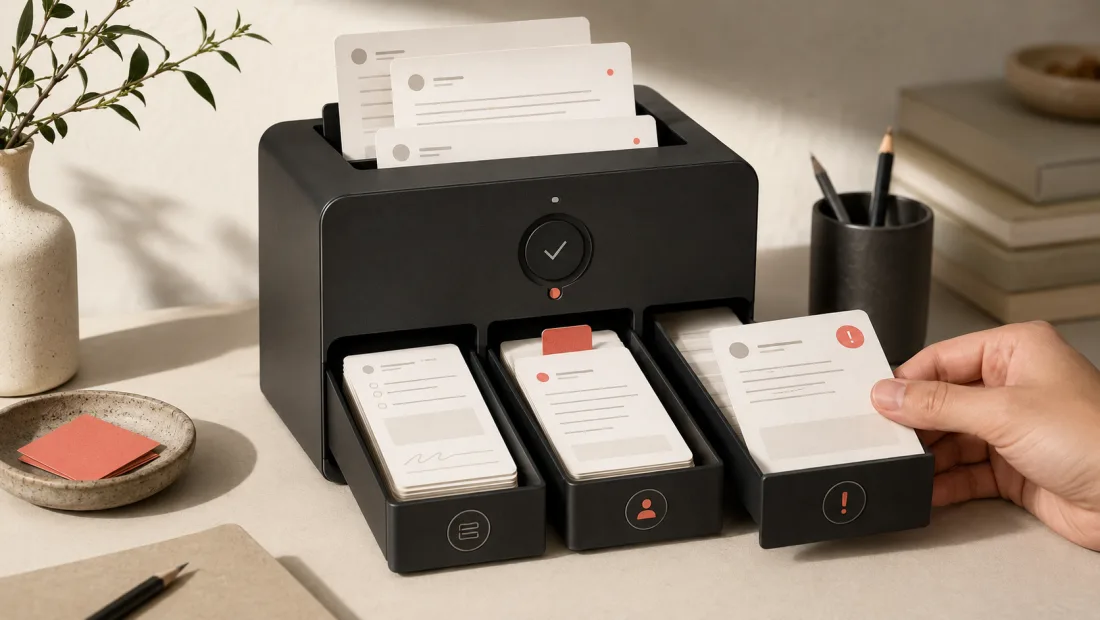
The safest pattern for anything customer-facing is draft-and-approve: the AI writes, you read it in seconds, you send. You keep the judgement and still lose most of the typing. Fully automatic sending belongs only to the narrowest, most repetitive messages — never to anything involving money, commitments, or an unhappy customer.
The costs nobody subtracts
Published time-savings figures count the drafting and ignore the prompting, the reading, the correcting and the checking. Those costs are real. An automation that needs constant supervision has moved the work, not removed it.
The honest way to know your own number is to measure one recurring task for a week, with the checking time included. One week of your own data beats any published average.
A realistic first month
One or two tasks genuinely handed over. Not a transformed business. That is a good outcome, and treating it as a disappointing one is how people abandon something that was working.
The posts below cover each of these in more depth — what fits, what to start with, what it saves, and where it goes wrong.