The pattern behind everything it is good at
Before the list, the rule underneath it.
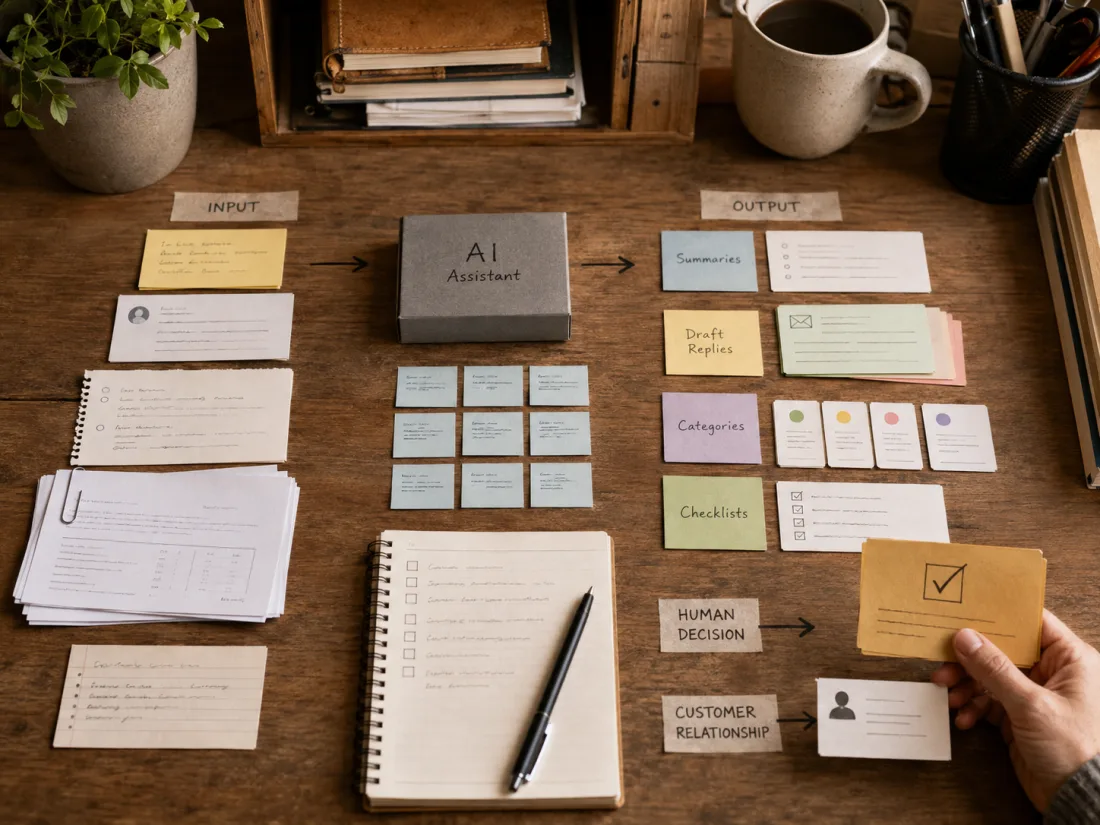
AI is good at work where the input is messy and the output has a predictable shape.
A voice note, a long email thread, a pile of receipts, a rambling call transcript. Those are messy inputs. A summary, a draft reply, a structured list, a filled-in template. Those are predictable outputs.
A simple way to think about it is this. AI is very good at being the person who turns the mess on your desk into a tidy first draft. It is not good at being the person who decides what should have been on your desk.
Once you see that pattern, you can classify your own tasks without anyone's list.
What it does well
Turning conversations into records. A recorded call becomes notes, decisions, and a list of who owes what by when. This is probably the highest-value thing most small businesses ignore, because everyone hates writing up calls and everyone forgets details.
First drafts of routine writing. Follow-ups, quotes, reminders, policy explanations, the third version of the same onboarding email. Not your important writing. The repetitive kind that eats an hour a week.
Reading things you do not have time to read. A long contract, forty pieces of customer feedback, a competitor's pricing page. It will pull out the parts that matter and tell you what to look at properly.
Sorting and routing. Which of these thirty inbox messages are actually leads? Which reviews need a reply today? Sorting is a genuinely hard, genuinely boring job, and it does it well.
Getting you unstuck. Twenty subject lines, ten names, five ways to explain a price increase. Most will be mediocre. Two will be usable, and you were staring at a blank page anyway.
Explaining things at your level. A contract clause, a tax term, an error message. Ask it to explain like you have never seen it before, and it will, without making you feel stupid for asking.
What it does badly
Anything where being wrong is expensive and you would not notice. It will state a wrong number with total confidence. If you cannot check the output, do not use it there.
Knowing what matters. It can write the follow-up. It cannot tell you that this particular client is about to leave and needs a call instead. That judgment comes from context it does not have.
Your voice, unaided. Left alone it defaults to a bland corporate register. Getting it to sound like you takes effort and examples, which is a whole topic on its own.
Anything needing current, specific facts about your business. Your actual prices, your actual availability, what you said last Tuesday. It does not know unless you tell it, every time.
Relationships. The apology, the difficult conversation, the thank-you that meant something. People can tell, and being caught outsourcing those costs more than the time it saved.
How to work out which of your tasks fit
Take one week and write down every task that made you sigh.
For each one, ask three questions:
1. Does it start from something messy? A transcript, a thread, a pile of documents. 2. Does the finished thing follow a predictable shape? A summary, a draft, a list, a filled form. 3. Would I notice within a minute if it came back wrong?
Three yeses means hand it over this week, and the order to automate things in matters more than which tool you pick.
Two yeses means try it, and check the output properly for a while.
One or none means keep doing it yourself, and stop feeling guilty about that.
A realistic first month
If you want a plan rather than a list.
Week one. Pick your most repetitive piece of writing. Do it with AI five times, correcting each result. You are learning what to include in the request, not saving time yet.
Week two. Record one client call and have it produce notes and actions. Compare against what you would have written. This is usually the moment people stop being skeptical.
Week three. Point it at something you have been avoiding reading.
Week four. Look back and find the one that saved real time. Do more of that, and drop the rest.
Notice that none of this needs new software, a subscription, or anyone technical. That matters, because most small businesses stall waiting to buy the right tool when the first month costs nothing but attention.
The part nobody tells you
The businesses getting the most out of this are not the technical ones.
They are the ones with a clear idea of how they already work.
If your process lives entirely in your head, AI cannot help much, because you cannot describe the task well enough to hand it over. If you can explain the job to a new hire in five minutes, you can explain it to AI.
Which means the useful preparation is not learning about AI at all.
It is writing down how you actually do the thing.
Everything else follows from that.